
Introduction

Recycling bins form one of the most essential foundations of environmental sustainability by enabling waste separation at the source. With rapid population growth, urbanization, and increasing industrial production, waste volumes continue to rise. Uncontrolled disposal of this waste creates serious risks for both the environment and public health. At this point, recycling bins are not merely collection units; they represent the starting point of an effective waste management strategy.
Correctly selected and strategically placed recycling bins make it easier to separate plastic, glass, paper, metal, and organic waste. As a result, recycling processes become more efficient, disposal costs decrease, and zero-waste targets are supported with measurable outcomes. From municipalities to industrial facilities and corporate campuses, recycling bins are now enhanced with smart technologies that improve operational efficiency.
This comprehensive guide explains what recycling bins are, their main types, usage areas, and how to choose the right recycling bin for sustainable waste management.
Table of Contents
- What Are Recycling Bins?
- The Importance of Recycling Bins in Waste Management
- Types of Recycling Bins
- Waste Sorting Bins and Source Separation
- Where Are Recycling Containers Used?
- Separate Recycling Bins for Plastic, Glass, and Paper
- Recycling Bins in Industrial Areas
- The Role of Recycling Bins in Zero Waste Systems
- Smart Recycling Bins and Digital Monitoring
- Key Factors When Choosing Recycling Bins
- Integrated Solutions for Municipalities and Corporations
- Frequently Asked Questions
- Conclusion
What Are Recycling Bins?
Recycling bins are specially designed collection units that allow different types of waste to be separated without contamination. By separating waste at the source, recyclable materials can be efficiently processed and returned to production cycles. This approach delivers both environmental and economic benefits.
The main purpose of recycling bins is to distinguish recyclable waste from general waste. Through this separation, recyclable materials are recovered while the volume of waste sent to landfills is significantly reduced.
The Importance of Recycling Bins in Waste Management
Successful waste management begins with proper separation at the source. Recycling bins play a strategic role at this initial stage.
Key benefits of recycling bins include:
- Enabling waste separation at the source
- Reducing processing load at recycling facilities
- Supporting raw material conservation
- Lowering carbon footprint
- Increasing environmental awareness
These benefits position recycling bins as an essential component of sustainable environmental policies.
Types of Recycling Bins
Recycling bins are categorized based on usage area, capacity, and waste type.
The most common types include:
- Indoor recycling bins
- Outdoor recycling bins
- Recycling containers
- Industrial recycling bins
- Smart recycling bins
Each type is designed to meet specific operational and environmental requirements.
Waste Sorting Bins and Source Separation
Waste sorting bins represent the most critical step in the recycling process. Using color coding and clear labeling, these bins guide users and minimize incorrect disposal.
Common color codes include:
- Blue: Paper and cardboard
- Yellow: Plastic
- Green: Glass
- Grey: Metal
This systematic structure enables effective participation in recycling programs by both individuals and organizations.
Where Are Recycling Containers Used?
Recycling containers are preferred in areas with high waste generation. Their large capacity and durable structure make them suitable for outdoor use.
Common usage areas include:
- Municipal streets and public squares
- Residential complexes
- Schools and university campuses
- Shopping centers
- Industrial zones
When integrated with planned collection schedules, recycling containers maximize efficiency.
Separate Recycling Bins for Plastic, Glass, and Paper
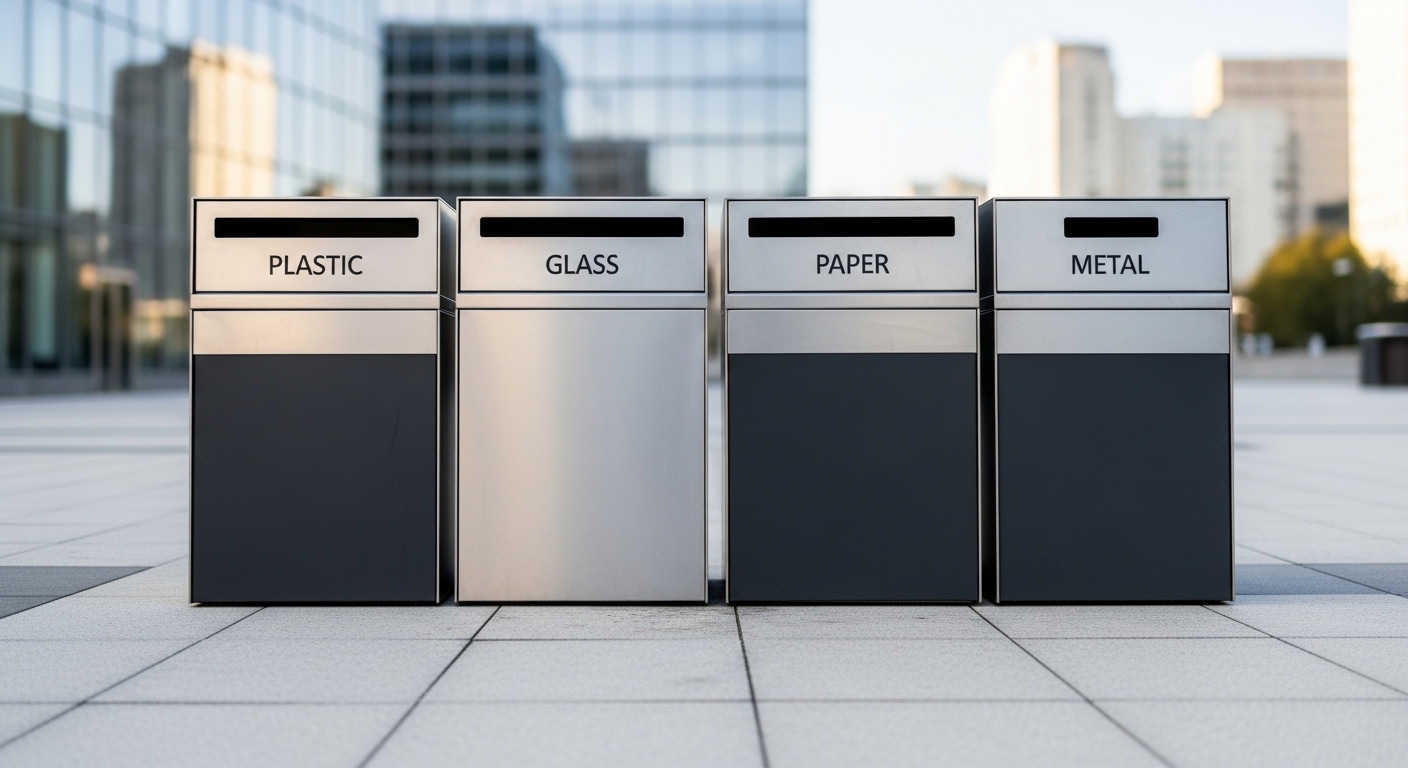
Each waste type requires a different recycling process. Collecting plastic, glass, and paper in separate bins significantly improves recycling efficiency.
Separate recycling bins help to:
- Preserve material purity
- Reduce sorting effort at recycling facilities
- Increase recovery rates
This approach is particularly critical for zero-waste initiatives.
Recycling Bins in Industrial Areas
Industrial facilities generate significantly higher volumes of waste than residential or office spaces. Industrial recycling bins are designed with higher capacity, durability, and mobility to meet these demands.
Proper use of recycling bins in industrial environments ensures regulatory compliance and minimizes environmental risks.
The Role of Recycling Bins in Zero Waste Systems
Zero-waste systems aim to minimize waste generation and maximize reuse and recycling. Recycling bins are the most visible and functional components of these systems.
Within zero-waste projects, recycling bins:
- Improve traceability of waste streams
- Increase awareness and participation
- Support certification and compliance processes
At this stage, Burkasan provides integrated recycling and waste management solutions that help organizations achieve measurable sustainability goals.
Smart Recycling Bins and Digital Monitoring
With technological advancement, recycling bins have become smarter. Smart recycling bins are equipped with fill-level sensors, data analytics, and remote monitoring capabilities.
These systems provide:
- Optimized collection routes
- Reduced operational costs
- Data-driven waste management decisions
Burkasan’s smart waste management infrastructure supports digital transformation in recycling operations.
Key Factors When Choosing Recycling Bins
Selecting the right recycling bins directly affects system efficiency.
Key considerations include:
- Indoor or outdoor usage
- Types of waste to be collected
- Daily waste volume
- Material durability and quality
- Compliance with zero-waste regulations
Proper planning ensures long-term cost efficiency and environmental performance.
Integrated Solutions for Municipalities and Corporations
For municipalities and large organizations, recycling bins alone are not sufficient. Collection, monitoring, and reporting processes must be managed as an integrated system.
Burkasan combines recycling bins with waste management software and operational planning tools to deliver end-to-end solutions. This approach allows sustainability strategies to be supported by real data and measurable outcomes.
Frequently Asked Questions
What types of waste can be collected in recycling bins?
Recycling bins are used to collect plastic, glass, paper, metal, and in some cases organic waste.
Are recycling bins mandatory?
Under zero-waste regulations, recycling bins are mandatory for many organizations and facilities.
Can recycling bins be used outdoors?
Yes. Outdoor recycling bins are designed with UV resistance and weather-proof materials.
What is the purpose of smart recycling bins?
Smart recycling bins monitor fill levels and optimize waste collection operations.
Why are industrial recycling bins different?
Industrial waste volumes are higher and heavier, requiring reinforced structures and larger capacities.
Conclusion
Recycling bins are a fundamental element of sustainable waste management. Properly planned and correctly selected recycling bins improve waste separation, increase recycling rates, and reduce environmental impact. When supported by smart technologies, these systems deliver maximum efficiency. With its integrated recycling and waste management solutions, Burkasan helps organizations achieve their zero-waste objectives in a reliable and sustainable manner.