
Introduction
Sustainable waste management has become a strategic priority for cities, industries, and institutions worldwide. As waste volumes increase due to urbanization and industrial growth, the need for efficient collection and separation systems has never been greater. Recycling containers play a central role in this process by enabling waste to be sorted at the source and directed into appropriate recycling streams.
Properly designed and well-positioned recycling containers reduce environmental pollution, improve recycling efficiency, and support circular economy goals. From municipalities and industrial facilities to commercial buildings and educational institutions, recycling container systems form the most visible and practical foundation of responsible waste management.

What Are Recycling Containers?
Recycling containers are specially designed units used to collect and temporarily store recyclable waste such as plastic, glass, paper, metal, and mixed recyclables. Their primary function is to support source separation, ensuring that recyclable materials remain clean and suitable for recovery.
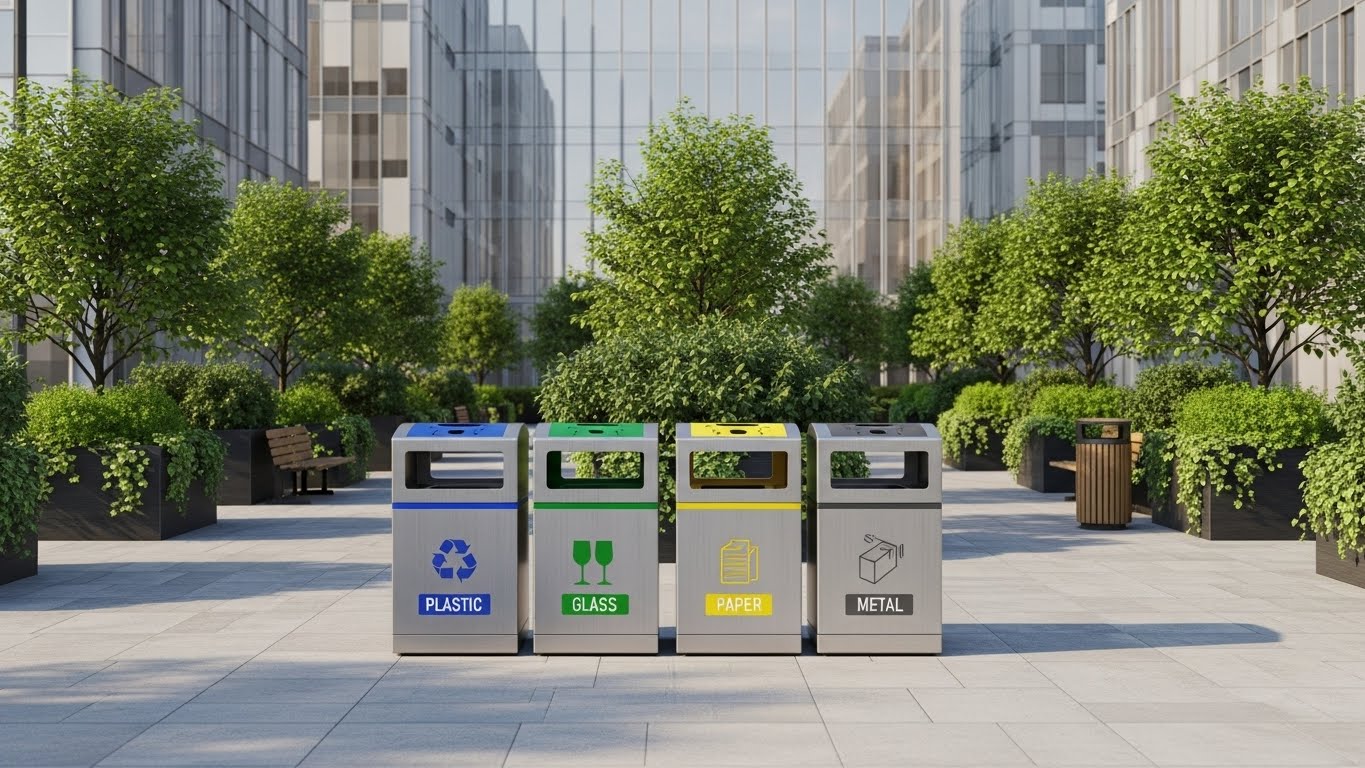
Unlike general waste bins, recycling containers are typically color-coded, clearly labeled, and built to match the physical characteristics of different waste types. This design approach improves user compliance and significantly increases recycling rates.
The Importance of Recycling Containers in Waste Management
An effective waste management system depends on more than just collection and disposal. It requires structured separation, controlled storage, and efficient transfer to recycling facilities. Recycling containers contribute to this system by:
- Preventing recyclable materials from being contaminated
- Increasing material recovery rates
- Reducing landfill dependency
- Supporting compliance with environmental regulations
- Lowering long-term waste management costs
When implemented correctly, recycling container systems transform waste from an environmental burden into a valuable resource.
Types of Recycling Containers
Recycling containers are available in various designs depending on their intended use:
By location
- Indoor recycling containers for offices, schools, and public buildings
- Outdoor recycling containers for streets, parks, and residential areas
By capacity
- Small containers for low-volume waste generation
- Medium containers for commercial and residential complexes
- Large-capacity containers for industrial and municipal use
Selecting the right type ensures operational efficiency and user convenience.
Waste Separation Containers and Source Sorting
Source separation is the cornerstone of modern recycling systems. Waste separation containers make it possible to classify materials at the point of disposal rather than sorting them later.
Common color-coded systems include:
- Blue for paper and cardboard
- Yellow for plastic and metal
- Green for glass
- Gray or black for non-recyclable waste
This approach minimizes contamination and allows recycling facilities to process materials more effectively.
Zero Waste Recycling Container Systems
Zero waste strategies aim to reduce waste generation while maximizing reuse and recycling. Recycling containers are essential to achieving these goals.
A successful zero waste container system requires:
- Waste stream analysis
- Correct container selection
- Strategic placement
- Clear user guidance
- Ongoing monitoring and reporting
Organizations that invest in structured container systems gain both environmental and operational benefits while strengthening their sustainability credentials.
Containers for Plastic, Glass, and Paper Recycling
Different recyclable materials require different container designs:
- Glass recycling containers are built with reinforced structures and narrow openings
- Plastic recycling containers prioritize high volume and lightweight construction
- Paper recycling containers are designed to protect contents from moisture
Matching container design to material type improves recycling quality and safety.
Industrial Recycling Containers
Industrial facilities generate large volumes of recyclable waste, often with specific handling requirements. Industrial recycling containers are designed to withstand heavy use and harsh environments.
Typical features include:
- High-capacity structures
- Forklift and lifting compatibility
- Durable, weather-resistant materials
- Compliance with industrial waste standards
These containers support continuous recycling operations without disrupting production processes.
Municipal Recycling Containers
Municipal recycling containers are installed in public spaces and residential areas. Their design prioritizes accessibility, durability, and urban aesthetics.
Both above-ground and underground systems are widely used to:
- Reduce visual clutter
- Improve hygiene
- Increase collection efficiency
Well-planned municipal container systems play a major role in building public recycling awareness.
Choosing the Right Recycling Container
Before selecting recycling containers, the following factors should be evaluated:
- Type and quantity of waste generated
- Indoor or outdoor use
- Durability and material quality
- Compatibility with collection systems
- Regulatory and zero waste requirements
A data-driven selection process ensures long-term efficiency and compliance.
Conclusion
Recycling containers are more than simple waste bins; they are a critical infrastructure element of sustainable waste management. When properly selected and strategically deployed, they improve recycling performance, reduce environmental impact, and support regulatory compliance.
From municipalities and commercial buildings to industrial facilities, recycling containers enable effective source separation and resource recovery. As sustainability expectations continue to rise, investing in well-designed recycling container systems becomes an essential step toward a cleaner and more responsible future.
For comprehensive recycling container solutions and integrated waste management systems, explore Burkasan’s sustainable environmental services.