
Introduction
Plastic waste import regulations determine the conditions under which plastic waste can be brought into Türkiye, which waste categories are subject to control, what permits importing facilities must hold, and how inspection procedures are carried out. Although suitable plastic waste can be processed as secondary raw material within the recycling industry, its cross-border movement is subject to strict environmental controls.
Plastic waste imports are not treated solely as conventional foreign trade transactions. The characteristics of the waste, potential environmental and health risks, recyclability, technical capacity of the receiving facility, and required environmental permits are all important parts of the process.
For this reason, companies planning to import plastic waste must comply with the current legislation and follow the procedures established by the relevant public authorities.
In 2026, the regulatory framework includes the Communiqué on Import Inspection of Wastes Controlled for Environmental Protection Purposes (Product Safety and Inspection: 2026/3) and the 2026/1 Circular on Waste Import Practices, dated January 2, 2026.
For recycling and recovery companies such as Burkasan, regulatory compliance is an essential part of managing the entire process from the source of the waste to transportation, sorting, processing and conversion into reusable raw materials.
Table of Contents
- What Is Plastic Waste Import?
- Which Regulations Govern Plastic Waste Imports in Türkiye?
- What Rules Apply to Plastic Waste Imports in 2026?
- Can Every Type of Plastic Waste Be Imported?
- Who Can Import Plastic Waste?
- What Documents Are Required for Waste Imports?
- How Does the Customs and Inspection Process Work?
- Why Are Waste Codes and HS Codes Important?
- Environmental Responsibilities in Plastic Waste Imports
- The Role of Recycling Facilities
- Plastic Waste Imports and the Circular Economy
- Burkasan’s Approach to Recycling
- Frequently Asked Questions
- Conclusion
What Is Plastic Waste Import?
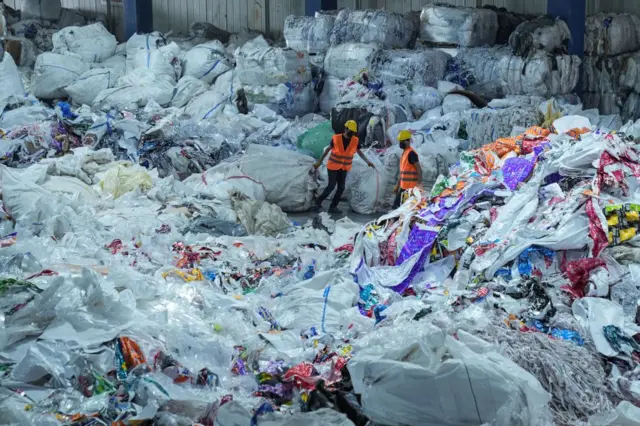
Plastic waste import refers to the process of bringing eligible plastic waste generated in another country into Türkiye for recovery, recycling or other legally permitted purposes.
Plastic waste import refers to the process of bringing eligible plastic waste generated in another country into Türkiye for recovery, recycling or other legally permitted purposes. For a broader overview of the process, its scope and its role in the recycling industry, you can also read our detailed article on plastic waste imports.
An important point is that the material must not simply be classified as “plastic.” It must also comply with the relevant waste classifications, technical criteria and import requirements defined under applicable legislation.
Recyclable plastic waste that meets the required conditions can be processed and converted into secondary raw materials for use in new production processes. This makes it possible to extend the economic life of materials while helping reduce the consumption of virgin raw materials.
However, plastic waste may be subject to different legal requirements if it contains contaminants, is mixed with unsuitable materials or presents environmental risks. Therefore, correctly identifying and classifying the waste before shipment is essential.
Which Regulations Govern Plastic Waste Imports in Türkiye?
Plastic waste import regulations in Türkiye are not based on a single legal text. The process is governed by a combination of environmental legislation, import control rules, waste management requirements and international obligations.
Key regulations and legal frameworks include:
- Environmental Law No. 2872,
- the Communiqué on Import Inspection of Wastes Controlled for Environmental Protection Purposes,
- the 2026/1 Circular on Waste Import Practices,
- the Waste Management Regulation,
- relevant environmental permit and licensing regulations,
- international rules arising from the Basel Convention.
Certain waste streams, including various plastic, paper and glass wastes, may be controlled or restricted for environmental protection purposes.
Therefore, the fact that a plastic material has commercial value or is technically recyclable does not automatically mean that it can be imported into Türkiye. Its legal classification and applicable import conditions must also be evaluated.
What Rules Apply to Plastic Waste Imports in 2026?
One of the key regulations applicable in 2026 is the Communiqué on Import Inspection of Wastes Controlled for Environmental Protection Purposes (Product Safety and Inspection: 2026/3).
This regulation establishes important principles concerning the import of waste materials that are subject to environmental controls.
Another important document is the 2026/1 Circular on Waste Import Practices, published by the Ministry of Environment, Urbanization and Climate Change on January 2, 2026.
The circular is accompanied by various documents and application forms, including requirements related to Waste Importer Registration Certificates, shipment notification forms, residual waste management plans and realization reports.
Businesses should therefore avoid relying solely on procedures applied in previous years. Before each import transaction, the current year’s regulations, circulars and application requirements should be reviewed.
Can Every Type of Plastic Waste Be Imported?
No. Not all plastic waste categories have the same legal status.
Whether plastic waste can be imported depends on factors such as:
- the type of plastic,
- waste composition,
- contamination level,
- presence of hazardous substances,
- applicable waste code,
- customs classification,
- current import restrictions.
Under Turkish environmental legislation, hazardous waste is subject to strict restrictions, and some waste categories may be prohibited from import.
Other waste streams may be imported only when specified technical, environmental and licensing conditions are met.
Before importing plastic waste, companies should verify:
- the correct waste code,
- the relevant HS or customs tariff code,
- whether the waste has hazardous characteristics,
- whether the waste is included in controlled or prohibited categories,
- whether the facility is licensed to process the material,
- whether all shipment and customs documents are complete.
These controls help prevent unsuitable waste from entering the country and support the traceable management of materials imported for recycling.
Who Can Import Plastic Waste?
Plastic waste import regulations require importing companies to meet more than ordinary commercial import requirements.
Depending on the type of waste, companies must hold the necessary environmental permits and licences and must demonstrate that the receiving facility has sufficient technical capacity to process the imported material.
For controlled waste imports, documentation such as an Environmental Permit and Licence Certificate or other relevant authorization may be required under the applicable rules.
The purpose of these requirements is to ensure that imported plastic waste is processed by facilities with the necessary technical infrastructure and environmental management capacity.
Recycling facilities must also comply with environmental requirements after the waste enters the facility. These responsibilities may include acceptance procedures, storage, classification, processing, record keeping and management of residual waste.
What Documents Are Required for Waste Imports?
The documentation required for plastic waste imports can vary depending on the type of waste, legal classification and current regulations.
Businesses should therefore review the latest requirements before every shipment.
Documents and records that may be required include:
- Waste Importer Registration Certificate application documents,
- shipment information forms,
- environmental permits and licences,
- residual waste management plans,
- facility inspection reports,
- import realization reports,
- capacity-related documents,
- customs and transportation documents.
Accurate documentation is essential because inconsistencies between the declared waste characteristics and shipment documents may lead to delays or regulatory problems.
Businesses should ensure that the physical characteristics of the waste, waste classification and accompanying documentation are fully consistent.
Official application documents, shipment forms and current requirements can be accessed through the Ministry of Environment, Urbanization and Climate Change’s official website.
How Does the Customs and Inspection Process Work?
Customs procedures for plastic waste imports involve more than reviewing standard commercial documents.
Environmental compliance is also an important part of the inspection process.
The imported waste must correspond to the declared specifications, the receiving facility must hold the required permits, and the shipment must comply with the relevant regulatory requirements.
Digital registration and authorization systems used by public authorities also help improve the traceability of waste movements.
Problems may arise when:
- the physical characteristics of the waste do not match the declared classification,
- prohibited or unauthorized materials are included in the shipment,
- documentation is incomplete,
- permits are missing,
- the declared waste code is incorrect.
For this reason, companies should consider plastic waste import regulations from the beginning of the procurement process rather than treating compliance as a final customs step.
Why Are Waste Codes and HS Codes Important?
Correct classification is one of the most important issues in plastic waste imports.
Two plastic materials that appear similar may be treated differently under the regulations depending on their composition, contamination level, source or technical characteristics.
Waste codes identify how materials are classified for waste management purposes, while HS or customs tariff codes are used to classify goods during customs procedures.
Incorrect classification may result in:
- incorrect import applications,
- missing documentation,
- delays at customs,
- inspection problems,
- rejection of shipments,
- possible administrative sanctions.
Businesses should therefore verify that technical specifications, waste codes, customs codes and official documents are consistent before arranging a shipment.
Environmental Responsibilities in Plastic Waste Imports
The international movement of plastic waste is environmentally sensitive and therefore subject to significant regulatory oversight.
The objective of the regulations is not only to record the movement of waste but also to prevent practices that could create risks for the environment or human health.
Türkiye is also a party to the Basel Convention, which provides an international framework for controlling the transboundary movement of hazardous and certain other wastes.
The Convention emphasizes environmentally sound waste management and the controlled movement of waste between countries.
This approach increases the importance of traceability throughout the plastic waste management process.
Key information should be traceable, including:
- where the waste originated,
- what type of material it contains,
- which facility received it,
- how it was processed,
- what secondary material was produced,
- how residual waste was managed.
Effective traceability is therefore an important part of sustainable and legally compliant plastic waste management.
The Role of Recycling Facilities
One of the fundamental principles of plastic waste import regulations is that imported waste should be processed in appropriate recovery and recycling facilities.
Recycling facilities do more than physically process materials.
They also play an important role in:
- waste acceptance,
- classification,
- storage,
- traceability,
- sorting,
- recycling,
- recovery,
- management of process residues.
The aim of an effective recycling process is to transform suitable waste into secondary raw materials that can re-enter manufacturing processes.
This helps prevent recyclable materials from becoming uncontrolled environmental waste and supports more efficient use of resources.
Burkasan contributes to the circular economy by focusing on the recovery of recyclable materials and their transformation into resources that can be reused within industrial production.
Plastic Waste Imports and the Circular Economy
The circular economy aims to keep products and materials within the economic system for as long as possible.
Plastic recycling is an important part of this model because properly processed plastic waste can be converted into secondary raw materials and returned to production cycles.
However, the relationship between waste imports and the circular economy must be managed carefully.
Poor-quality, highly contaminated or technically unsuitable waste may create environmental challenges.
In contrast, properly classified recyclable materials that are transported legally and processed at licensed facilities can contribute to secondary raw material production.
Therefore, sustainable plastic waste management should not focus only on increasing recycling volumes.
A more effective approach is based on:
- quality,
- traceability,
- regulatory compliance,
- efficient processing,
- responsible residual waste management.
These factors are essential for creating a reliable and sustainable recycling system.
Burkasan’s Approach to Recycling
Creating lasting value in waste management requires more than simply collecting or transporting waste.
The characteristics of the material must be identified, appropriate recovery methods must be selected, and recyclable materials must be transformed into usable secondary resources.
Burkasan adopts an approach focused on evaluating different waste streams according to their characteristics and returning recoverable materials to the economic cycle.
In plastic recycling, effective sorting, appropriate processing methods and regulatory compliance are essential for both environmental sustainability and the quality of recycled raw materials.
As environmental standards continue to develop, traceability, advanced recycling infrastructure and circular economy principles are expected to become increasingly important within Türkiye’s plastic waste management sector.
Frequently Asked Questions
Is plastic waste import banned in Türkiye?
Not all plastic waste imports are completely banned. Certain waste categories may be prohibited, while others may be imported under specific control, permit and licensing requirements.
The current status of a particular waste type should always be checked against the applicable regulations for the relevant year.
What are the main plastic waste import regulations in 2026?
The main regulatory documents include the Communiqué on Import Inspection of Wastes Controlled for Environmental Protection Purposes (2026/3) and the 2026/1 Circular on Waste Import Practices.
Other environmental, customs and waste management regulations may also apply depending on the material.
Can hazardous plastic waste be imported into Türkiye?
Hazardous waste is subject to import restrictions under Turkish environmental legislation. Whether a particular plastic waste is considered hazardous depends on its composition, characteristics and legal classification.
Can any company import plastic waste?
No. Companies must meet the environmental licensing, registration and technical requirements applicable to the waste category they intend to import.
What is a Waste Importer Registration Certificate?
A Waste Importer Registration Certificate is one of the official documents that may be required from facilities importing waste under the relevant legislation.
The application requirements and supporting documents are published by the Ministry of Environment, Urbanization and Climate Change.
Why is the HS code important for plastic waste imports?
The HS code determines the customs classification of imported goods.
Correct classification is important because the applicable inspection, documentation and import requirements may vary depending on the customs code and waste category.
What happens to imported plastic waste?
Plastic waste that meets regulatory and technical requirements may be processed in authorized recycling facilities and converted into secondary raw materials.
These materials can then be reused in suitable manufacturing applications.
Which authorities oversee plastic waste imports in Türkiye?
The process involves several public authorities, particularly the Ministry of Trade and the Ministry of Environment, Urbanization and Climate Change.
Customs procedures and environmental compliance controls are carried out in accordance with the applicable legislation.
What documents are required for plastic waste imports?
Requirements vary depending on the waste category and current legislation.
Documents may include importer registration records, shipment information, environmental permits, facility licences, customs documentation and waste management records.
Companies should always review the current requirements before arranging a shipment.
Conclusion
Plastic waste import regulations establish the framework for ensuring that recyclable plastic waste entering Türkiye is handled in a controlled, traceable and environmentally responsible manner.
The 2026 regulatory framework includes the 2026/3 import inspection communiqué and the 2026/1 waste import practices circular, together with other environmental and customs requirements.
Correct waste classification, appropriate environmental permits, accurate documentation, shipment traceability and processing in suitable recycling facilities are essential for regulatory compliance.
When properly managed, recyclable plastic waste can be transformed into secondary raw materials rather than becoming an environmental burden.
Burkasan supports this approach through its recycling and resource recovery activities, focusing on returning recoverable materials to production cycles and contributing to a more sustainable and circular use of resources.