
Plastic manufacturers need to consider many factors when selecting raw materials, including mechanical strength, impact resistance, processability, color consistency and suitability for the intended production method. The properties of the selected material directly influence product quality, production efficiency and long-term performance. Colored PP Copolymer is a polypropylene-based material that can be used in a wide range of applications due to its balanced impact resistance, processability and lightweight structure.
PP copolymer is a thermoplastic material produced by polymerizing propylene together with another monomer, usually ethylene. The addition of a second monomer changes the molecular structure of polypropylene and can improve properties such as impact strength, flexibility, toughness and low-temperature resistance.
Colored PP copolymer materials may be produced from virgin raw materials or recovered from industrial plastic production waste. When manufacturing scraps are collected, separated and processed under controlled conditions, they can be converted into reusable post-industrial recycled materials.
Burkasan offers Colored PP Copolymer PIR within its industrial waste recycling product range. This recovered material may be used in automotive parts, household goods, packaging products, injection-molded components, industrial containers and plastic crates, depending on its technical characteristics and the requirements of the final application.
Table of Contents
- What Is Colored PP Copolymer?
- What Is the Structure of PP Copolymer?
- What Are the Types of PP Copolymer?
- How Is Colored PP Copolymer Produced?
- What Does Colored PP Copolymer PIR Mean?
- Main Properties of Colored PP Copolymer
- Differences Between PP Homopolymer and PP Copolymer
- Advantages of Using Colored PP Copolymer
- Applications of Colored PP Copolymer
- PP Copolymer in Injection Molding
- Factors Affecting Color Quality
- PP Copolymer Recycling Process
- Importance of PP Copolymer in the Circular Economy
- How to Select the Right Colored PP Copolymer
- Storage and Processing Conditions
- Burkasan Colored PP Copolymer Solutions
- Frequently Asked Questions
- Conclusion
What Is Colored PP Copolymer?
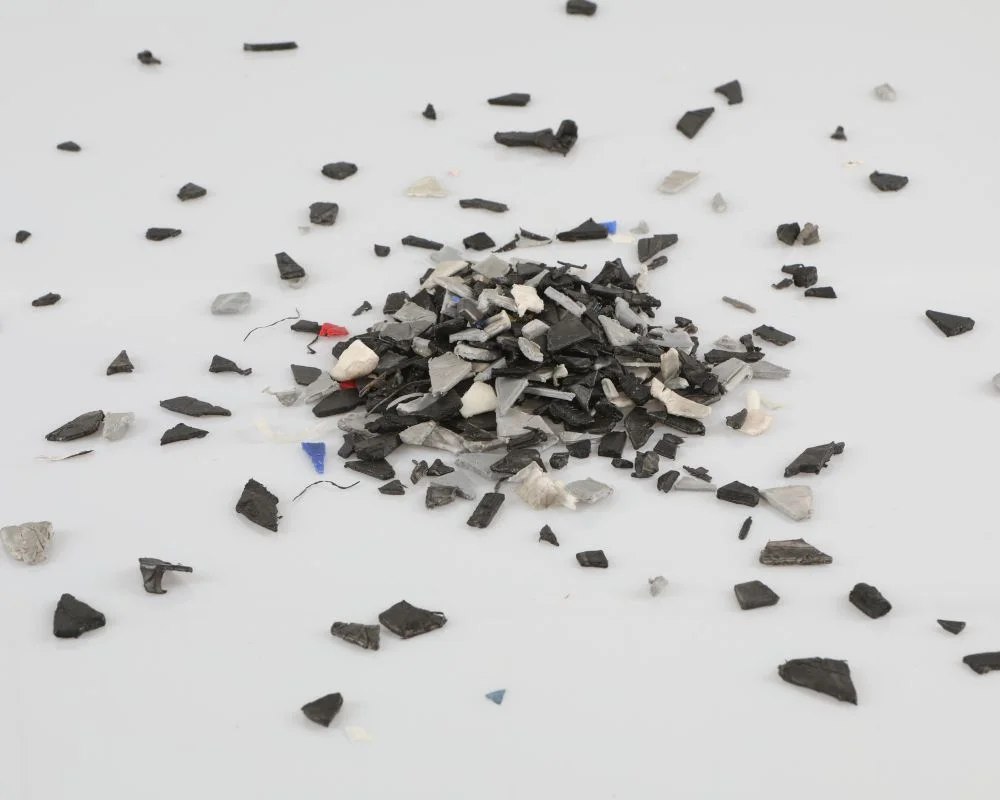
Colored PP Copolymer refers to polypropylene copolymer materials that have been manufactured, sorted or classified according to specific colors. These products may be supplied in different physical forms, including pellets, granules, flakes or regrind materials.
The appropriate form depends on the manufacturing process, equipment configuration and technical requirements of the final product. Injection molding manufacturers may use granulated or regrind PP copolymer materials, while other applications may require specially compounded or filtered grades.
Polypropylene, commonly abbreviated as PP, belongs to the thermoplastic polymer family. Thermoplastics soften when heated and become solid again when cooled. This characteristic allows polypropylene to be molded and, under suitable conditions, processed more than once.
The polypropylene family includes several material categories, such as:
- PP homopolymer
- Random PP copolymer
- Impact PP copolymer
- Filled polypropylene compounds
- Reinforced polypropylene compounds
- Recycled polypropylene materials
The term “colored” indicates that the material is not limited to its natural or transparent appearance. It may include a single color, a controlled color group or mixed-colored plastic materials.
Color classification is particularly important in recycled polypropylene production. The final appearance of recovered material is directly affected by the colors of the incoming plastic waste. Light-colored applications require carefully separated raw materials, while mixed-colored materials can often be used more efficiently in black, dark gray or other dark-colored products.
What Is the Structure of PP Copolymer?
A polymer consists of a large number of small molecular units connected through chemical bonds. These repeating molecular units form long chains that determine the physical and mechanical behavior of the material.
In PP homopolymer production, the polymer structure mainly consists of propylene monomers. In PP copolymer production, propylene is polymerized together with another monomer, generally ethylene.
Adding a second monomer changes the arrangement of the polymer chains. This modification can improve the flexibility, impact resistance and low-temperature behavior of polypropylene.
PP homopolymer is usually preferred when rigidity, stiffness and dimensional stability are the primary requirements. PP copolymer may be more suitable for products that need to withstand impact, repeated use, vibration or lower temperatures.
Impact PP copolymer materials generally contain a more flexible phase within a semi-crystalline polypropylene matrix. This structure can help the material absorb impact energy and reduce brittle failure.
However, not every PP copolymer provides the same performance. Material properties depend on several variables, including:
- Copolymer type
- Ethylene content
- Melt flow rate
- Molecular weight distribution
- Additive package
- Filler content
- Previous processing history
- Recycled material ratio
- Production conditions
For this reason, manufacturers should not select a material based only on the general PP copolymer definition. The technical characteristics of the selected product must be compared with the requirements of the final component.
What Are the Types of PP Copolymer?
PP copolymer materials are generally divided into two main categories: random PP copolymer and impact PP copolymer. These materials have different molecular structures and are used for different production purposes.
Random PP Copolymer
Random PP copolymer is produced by distributing a second monomer throughout the polypropylene chain. This molecular arrangement can improve transparency, gloss, flexibility and optical performance in suitable grades.
Random PP copolymer is commonly used in products such as:
- Transparent containers
- Household products
- Packaging components
- Medical products
- Caps and closures
- Pipes and fittings
- Consumer goods
- Thin-wall molded products
Random copolymer grades can be useful when appearance, transparency or flexibility is more important than maximum rigidity.
However, recovered or mixed-colored PP copolymer materials may not provide the visual characteristics expected from high-clarity virgin random copolymer grades. The intended application must therefore be evaluated before using recycled materials.
Impact PP Copolymer
Impact PP copolymer is designed to provide improved toughness and impact strength. It is often selected for applications exposed to physical impact, repeated handling or lower operating temperatures.
Typical applications include:
- Automotive interior parts
- Automotive exterior components
- Battery cases
- Industrial crates
- Storage boxes
- Plastic buckets
- Household appliances
- Garden products
- Technical covers
- Injection-molded industrial components
Impact PP copolymer may provide better resistance to cracking and breaking compared with standard PP homopolymer grades. Nevertheless, actual performance depends on the selected material grade, formulation and processing conditions.
Manufacturers should determine whether transparency, stiffness, toughness, heat resistance or low-temperature impact performance is the main priority before selecting a random or impact copolymer.
How Is Colored PP Copolymer Produced?
PP copolymer can be colored during manufacturing by using pigments, masterbatch products or specially formulated compounds. A masterbatch is a concentrated mixture containing pigments or performance additives dispersed in a polymer carrier.
During production, a controlled amount of masterbatch is mixed with the main polymer. The required ratio depends on the desired color, pigment strength, carrier compatibility and final product specifications.
Colored polypropylene compounds may also include additives that improve specific properties. These may include:
- UV stabilizers
- Antioxidants
- Impact modifiers
- Mineral fillers
- Glass fibers
- Flame retardants
- Processing aids
- Antistatic additives
- Slip agents
- Heat stabilizers
Each additive changes the behavior of the material. For example, mineral fillers may increase stiffness, while impact modifiers may improve toughness. UV stabilizers can help protect outdoor products from sunlight, whereas antioxidants can support thermal stability during processing.
In industrial recycling, colored PP copolymer production waste is collected and separated according to polymer type, source and color group. Manufacturing waste may include sprues, runners, defective parts, edge trims, start-up waste and products that fail quality control.
The recovered plastic may then be converted into flakes, regrind or recycled granules. The selected process depends on the cleanliness of the material and the requirements of the final customer.
Important classification criteria include:
- Polymer type
- Main color
- Light or dark color group
- Presence of labels or coatings
- Metal contamination
- Dust content
- Oil or chemical contamination
- Regrind particle size
- Presence of other plastic types
- Additive or filler content
Controlled sorting improves color consistency and material quality. If different colors are mixed, the recycled product may develop a dark gray, brown or mixed appearance. Such materials may still be suitable for black or dark technical components.
What Does Colored PP Copolymer PIR Mean?
PIR stands for Post-Industrial Recycled. It refers to materials recovered from manufacturing and industrial production processes before the final product reaches the consumer.
Post-industrial plastic waste may occur during injection molding, extrusion, thermoforming, blow molding or component assembly. These materials may include:
- Injection runners
- Sprues
- Edge trims
- Off-specification products
- Production start-up waste
- Color-transition materials
- Defective molded parts
- Unused production remnants
When these materials are properly separated and managed, they can be returned to the production cycle instead of being discarded.
Colored PP Copolymer PIR is obtained by recovering colored polypropylene copolymer waste generated during industrial manufacturing processes. The waste is identified, sorted, reduced in size and prepared for reuse.
PIR material is different from post-consumer recycled material. Post-consumer waste has already been used by consumers and may contain labels, food residues, dirt, moisture or a mixture of different polymers.
Industrial plastic waste is generally easier to identify because its source and material composition are more controlled. However, this does not mean that every PIR material has the same quality.
The performance of Colored PP Copolymer PIR may be affected by:
- Source material quality
- Color changes during production
- Polymer contamination
- Additive composition
- Storage conditions
- Number of previous heat cycles
- Cleaning and separation quality
- Particle-size consistency
Burkasan processes industrial plastic waste and offers PIR materials that can be evaluated in suitable manufacturing applications. Manufacturers should test the selected recycled material under their own production conditions before starting full-scale production.
For detailed information about post-industrial materials, recycling processes and their industrial benefits, explore Burkasan’s comprehensive guide to industrial waste recycling (PIR).
Main Properties of Colored PP Copolymer
Colored PP copolymer materials may offer a balanced combination of impact strength, processability, low density and chemical resistance. These characteristics make polypropylene copolymers suitable for a wide range of industrial applications.
The main properties of suitable Colored PP Copolymer grades may include:
- Good impact resistance
- Low material density
- Suitability for injection molding
- Balanced flexibility and stiffness
- Resistance to many chemicals
- Availability in different color groups
- Suitability for large molded components
- Good processing performance
- Potential for post-industrial recycling
- Use in repeated-handling applications
One of the important advantages of polypropylene is its relatively low density. This characteristic can support lightweight product design and reduce the total amount of material required for certain components.
Impact copolymer grades can provide improved toughness compared with standard homopolymer PP. This makes them useful for crates, containers, automotive components and products that may be dropped or exposed to repeated impacts.
Chemical resistance is another important characteristic of polypropylene. Appropriate PP copolymer grades may resist various acids, bases and chemical substances. However, chemical resistance must always be verified according to concentration, temperature and contact duration.
Recycled Colored PP Copolymer may not provide exactly the same performance as virgin raw material. Previous thermal exposure, contamination, mixed additives and polymer degradation can influence mechanical properties.
Therefore, manufacturers should evaluate:
- Melt flow rate
- Impact strength
- Tensile properties
- Flexural modulus
- Density
- Moisture
- Ash content
- Color variation
- Odor
- Contamination level
Safety-critical, medical, food-contact or regulated applications require additional testing and certification. Recycled materials should not be considered suitable for every application without technical verification.
Differences Between PP Homopolymer and PP Copolymer
PP homopolymer and PP copolymer belong to the same polypropylene family, but their molecular structures and performance characteristics are different.
PP homopolymer mainly consists of propylene monomers. PP copolymer contains propylene together with another monomer, generally ethylene.
PP homopolymer usually provides higher rigidity and stiffness. It may be preferred for products where dimensional stability and surface hardness are important.
PP copolymer is generally selected for applications requiring improved impact resistance, toughness or low-temperature performance.
| Property | PP Homopolymer | PP Copolymer |
|---|---|---|
| Molecular structure | Mainly propylene monomers | Propylene with another monomer |
| Stiffness | Generally higher | May be lower depending on grade |
| Impact resistance | Standard performance | Improved in impact grades |
| Low-temperature behavior | May become more brittle | May provide better toughness |
| Transparency | Depends on grade | Can be improved in random copolymers |
| Main applications | Fibers, sheets, packaging and rigid parts | Automotive, crates, containers and technical parts |
| Processing methods | Injection molding, extrusion and film | Injection molding, extrusion and blow molding |
This comparison provides a general overview. Different manufacturers may offer PP homopolymer and PP copolymer grades with significantly different technical specifications.
The final selection should be based on actual test results and technical data rather than the material category alone.
Advantages of Using Colored PP Copolymer
Colored PP copolymer may offer manufacturing and product-performance advantages when used in the correct application.
One advantage is that pre-colored material may reduce the need for additional pigment or masterbatch during production. However, color trials may still be required to achieve the desired final shade.
Suitable impact copolymer grades can help reduce the risk of cracking or breaking in products exposed to impact. This is particularly important for industrial crates, automotive components, protective covers and thick-wall injection-molded parts.
Using Colored PP Copolymer PIR can also support the recovery of industrial manufacturing waste. Instead of being removed as waste, production scraps can be processed and converted into reusable raw material.
The main advantages may include:
- Reuse of industrial production waste
- Reduced dependence on virgin raw materials
- Support for circular manufacturing models
- Availability in different color groups
- Suitability for injection-molded products
- Improved impact performance in appropriate grades
- Potential use in automotive and industrial applications
- Contribution to waste-reduction targets
- Alternative raw-material supply options
- Potential cost optimization in suitable applications
Manufacturers should not make purchasing decisions based only on price. Material consistency, contamination, processing stability and final product performance are equally important.
A low-priced raw material can lead to higher total production costs if it causes machine downtime, blocked filters, unstable color, surface defects or product breakage.
Applications of Colored PP Copolymer
The application range of Colored PP Copolymer depends on the material’s technical characteristics, physical form and recycling quality.
Burkasan Colored PP Copolymer materials may be evaluated in automotive parts, household goods, packaging materials, injection-molded components, industrial containers and plastic crates.
Automotive Parts
The automotive industry requires materials that combine lightweight construction, impact resistance and high-volume manufacturability.
PP copolymer materials may be used in:
- Interior trim components
- Technical covers
- Storage compartments
- Protective housings
- Under-hood components
- Connection parts
- Non-visible structural components
Automotive applications may require additional properties, including UV resistance, odor control, low emissions, dimensional stability and low-temperature impact performance.
When recycled PP copolymer is used, compliance with the automotive manufacturer’s technical specifications must be verified.
Household Goods
Colored PP copolymer may be used in storage products, buckets, cleaning equipment, garden products and various household accessories.
For these products, important requirements include:
- Impact strength
- Surface quality
- Color consistency
- Ease of cleaning
- Resistance to repeated use
- Dimensional stability
Dark-colored household products may allow a higher level of recycled content than light-colored or visually sensitive products.
Packaging Materials
Different PP copolymer grades may be used in rigid packaging, caps, closures, boxes and thin-wall containers.
Packaging manufacturers generally evaluate:
- Melt flow rate
- Mold-filling behavior
- Cycle time
- Impact resistance
- Surface appearance
- Dimensional consistency
Food-contact packaging requires materials that comply with applicable legislation. Not every recycled or colored PP copolymer is suitable for direct food contact.
Injection-Molded Components
Injection molding is one of the most common processing methods for Colored PP Copolymer.
The material is heated, melted and injected into a mold cavity under pressure. After cooling, the molded part is removed from the tool.
Injection molding can be used to manufacture:
- Technical parts
- Covers
- Cases
- Connectors
- Industrial components
- Consumer products
- Storage products
- Large plastic components
The selected PP copolymer must match the wall thickness, geometry and flow requirements of the part.
Industrial Containers and Crates
Plastic crates and industrial containers are exposed to repeated handling, stacking and impact. The selected material must provide sufficient toughness and load-bearing performance.
Dark or mixed-colored recycled PP copolymer may be suitable for industrial crates, transport boxes and non-decorative containers.
Before use, manufacturers should test:
- Drop resistance
- Stacking strength
- Low-temperature behavior
- Mold-filling performance
- Dimensional stability
- Long-term durability
PP Copolymer in Injection Molding
Injection molding is widely used to process PP copolymer because it enables rapid production of complex plastic components.
One of the most important technical values is the melt flow rate, generally expressed as MFI or MFR. This value indicates how easily the melted polymer flows under specified temperature and load conditions.
Higher-flow PP copolymer grades may be suitable for thin-wall or detailed parts. Lower-flow materials may be selected for thicker or mechanically demanding components.
Manufacturers should consider the following factors:
- Injection machine capacity
- Screw design
- Mold runner system
- Gate structure
- Part wall thickness
- Mold-filling distance
- Required impact resistance
- Surface-quality expectations
- Production cycle time
- Mold shrinkage
- Operating temperature
- Recycled-content ratio
The particle size of recycled PP copolymer can affect feeding performance. Irregularly sized regrind may cause unstable feeding or inconsistent melting.
Metal contamination and incompatible polymers can damage production equipment and reduce product quality. Appropriate screening, magnetic separation and incoming-material inspection are therefore important.
Before mass production, manufacturers should carry out a controlled production trial. The trial should evaluate:
- Mold filling
- Short shots
- Flash formation
- Surface marks
- Color distribution
- Odor
- Part weight
- Mechanical strength
- Cycle time
- Dimensional stability
Test results can be used to determine whether the material should be used alone or blended with virgin polypropylene.
Factors Affecting Color Quality
Color consistency is important in Colored PP Copolymer applications, especially when the final product has visible surfaces.
The final color is affected by more than the pigment concentration. The natural tone of the polymer, previous color history, additives, filler content and processing temperature can all influence appearance.
Mixed recycled colors may produce gray, brown or dark shades. These materials are generally easier to use in black or dark-colored products.
Light-colored products require more controlled sorting because dark pigments cannot easily be covered with light-colored masterbatch.
The main factors affecting color quality include:
- Color variation in the incoming material
- Pigment strength
- Masterbatch compatibility
- Previous heat exposure
- Processing temperature
- Burned or degraded material
- Mixed polymer contamination
- Additive concentration
- Filler content
- Machine cleanliness
- Residual color from previous production
- Storage conditions
Two batches classified under the same general color group may still have different shades. Manufacturers with strict brand-color requirements should produce sample plaques and carry out color measurements before mass production.
In some applications, black masterbatch can be used to cover mixed colors. However, the amount required depends on the existing color and pigment concentration of the recycled material.
PP Copolymer Recycling Process
The PP copolymer recycling process may include different stages depending on the source, contamination level and final product requirements.
Clean post-industrial materials are generally easier to process than mixed post-consumer waste.
A typical recycling process may include the following stages:
- Collection: PP copolymer production scraps are collected separately from other waste.
- Identification: The polymer type, source and color group are determined.
- Sorting: Metals, labels, incompatible plastics and other contaminants are removed.
- Size reduction: Large parts are crushed or shredded into smaller particles.
- Cleaning: Surface dirt, oil or production residues are removed when necessary.
- Drying: Washed material is dried before further processing.
- Homogenization: Similar materials are blended under controlled conditions.
- Quality control: Color, particle size, contamination and technical values are checked.
- Packaging: The material is packed for storage and shipment.
Some recovered PP copolymer materials may be used directly as regrind. Other materials may be melted, filtered and converted into recycled granules.
The selected process depends on the quality of the incoming waste and the technical requirements of the customer.
Polypropylene is a thermoplastic and can be reheated and reshaped. However, repeated heat cycles may affect the polymer chains. As the number of processing cycles increases, mechanical and rheological properties should be monitored.
Moisture, contamination and incompatible polymers are among the main quality challenges in polypropylene recycling.
Importance of PP Copolymer in the Circular Economy
The traditional linear production model follows a take, make, use and dispose approach. The circular economy aims to keep materials and resources within the economic system for as long as possible.
Recovering industrial plastic waste is a practical application of circular-economy principles. Colored PP copolymer scraps can be processed and returned to manufacturing instead of being treated only as waste.
Using Colored PP Copolymer PIR may contribute to:
- Reducing industrial waste
- Improving material efficiency
- Decreasing the use of virgin raw materials
- Diversifying raw-material supply
- Supporting recycled-content targets
- Developing industrial-symbiosis models
- Reducing waste-management costs
- Creating economic value from production scraps
Circular production requires more than purchasing recycled material. Products should also be designed for recycling, unnecessary material combinations should be avoided and waste should be separated at the source.
Manufacturers should monitor the performance of recycled materials and develop quality-control systems that support stable production.
Burkasan contributes to circular production by recovering industrial plastic waste and preparing suitable materials for reuse in different manufacturing applications.
Türkiye’s circular economy approach aims to reduce waste generation, extend the use of materials and increase the use of recycled resources in production.
How to Select the Right Colored PP Copolymer
Selecting the correct raw material requires more than checking the material name and color. Manufacturers must evaluate production conditions, product requirements and expected service performance.
The first step is determining whether the application requires random PP copolymer or impact PP copolymer.
Transparent products and impact-resistant industrial components do not require the same material characteristics.
Melt flow rate is another important selection criterion. The material must be able to fill the mold without causing excessive flash, short shots or unstable cycle times.
Before purchasing Colored PP Copolymer, manufacturers should answer the following questions:
- What product will be manufactured?
- Which processing method will be used?
- What is the required melt flow rate?
- What level of impact strength is needed?
- Is a strict color standard required?
- What recycled-content ratio is targeted?
- Will the material be blended with virgin PP?
- Will the product be used outdoors?
- Is UV stabilization required?
- Are there food-contact or medical requirements?
- Is automotive approval required?
- Is batch-to-batch consistency critical?
- Can sample production be carried out?
Recycled materials should also be evaluated for contamination, odor, color stability and polymer purity.
The presence of PE, ABS, PA or other incompatible polymers may change the surface quality and mechanical behavior of the final product.
The most suitable material is not always the least expensive option. Manufacturers should consider the total cost of production, including machine downtime, scrap rates, cleaning requirements and rejected products.
Storage and Processing Conditions
Proper storage helps protect the cleanliness and processing performance of Colored PP Copolymer.
Although polypropylene has relatively low moisture absorption, regrind and flake materials can carry surface moisture, dust and environmental contamination.
Materials should be stored in dry, covered and clean areas. Open packaging increases the risk of contamination and moisture exposure.
Different polymer types and color groups should be stored separately.
Recommended storage practices include:
- Separate products by polymer type.
- Keep different color batches apart.
- Store packaging above floor level.
- Protect materials from rain and direct sunlight.
- Keep products away from oils and chemicals.
- Record batch numbers and delivery dates.
- Reseal opened packaging.
- Prevent mixing with metal parts.
- Inspect materials before production.
- Use clear product labels.
Incoming quality control should include visual inspection, odor evaluation and packaging checks.
Suspicious materials should be isolated and tested before being added to production.
Burkasan Colored PP Copolymer Solutions
Burkasan recovers industrial plastic waste and converts suitable production scraps into reusable PIR materials.
Within this product range, Colored PP Copolymer provides an alternative raw-material option for manufacturers seeking to evaluate post-industrial polypropylene copolymer.
Depending on technical compatibility, Burkasan Colored PP Copolymer may be used in:
- Automotive components
- Household goods
- Packaging products
- Injection-molded parts
- Industrial containers
- Plastic crates
- Technical plastic products
Correct identification of industrial plastic waste is essential for effective recycling. The material should be separated according to polymer type, color and contamination level.
Burkasan’s industrial waste recycling approach supports the recovery of manufacturing waste and its conversion into materials that can be reused in suitable production processes.
Manufacturers planning to use Colored PP Copolymer PIR should compare the material properties with their own production requirements.
Sample production, injection trials and final-part testing can help determine the appropriate recycled-material ratio.
Some products may be manufactured with a high recycled-content ratio, while others may require a controlled blend of recycled and virgin polypropylene.
When contacting Burkasan, manufacturers should provide information about:
- Final product type
- Production method
- Existing raw material
- Required color
- Melt flow expectations
- Mechanical requirements
- Monthly material quantity
- Recycled-content target
Providing detailed production information helps support a more accurate material evaluation.
Frequently Asked Questions
What is PP copolymer?
PP copolymer is a polypropylene material produced by polymerizing propylene together with another monomer, generally ethylene. The copolymer structure may improve impact resistance, flexibility, toughness or optical properties.
What does Colored PP Copolymer mean?
Colored PP Copolymer refers to polypropylene copolymer materials that contain pigments or have been classified according to specific color groups. These products may be supplied as virgin granules, recycled pellets, flakes or regrind.
Where is PP copolymer used?
PP copolymer is used in automotive parts, household goods, packaging products, industrial crates, containers, battery cases and injection-molded technical components.
What is the difference between PP homopolymer and PP copolymer?
PP homopolymer mainly consists of propylene monomers, while PP copolymer includes another monomer, usually ethylene. Homopolymer generally provides greater rigidity, while suitable copolymer grades may offer improved impact strength and low-temperature performance.
Is PP copolymer impact resistant?
Impact PP copolymer grades are designed to provide better impact resistance than standard PP homopolymer. Actual performance depends on the specific grade, formulation, recycled-content ratio and processing conditions.
Is Colored PP Copolymer suitable for injection molding?
Suitable Colored PP Copolymer grades can be used in injection molding. Melt flow rate, part thickness, mold design, color requirements and mechanical expectations should be evaluated before production.
Can PP copolymer be recycled?
PP copolymer is a thermoplastic and can be recycled under suitable collection, sorting and processing conditions. Contamination, mixed polymers and repeated heat exposure may affect the performance of recycled material.
What is Colored PP Copolymer PIR?
Colored PP Copolymer PIR is a post-industrial recycled material obtained from colored PP copolymer waste generated during manufacturing. It is recovered before the product reaches the consumer.
Can colored PP copolymer be recolored?
Colored PP copolymer may be recolored using a darker pigment or black masterbatch. Producing a lighter color is more difficult because existing pigments remain in the material.
Can mixed-colored PP copolymer be used for black products?
Mixed-colored PP copolymer may be used in black products with an appropriate black masterbatch. The required masterbatch ratio depends on the existing colors and pigment strength.
How can the quality of recycled PP copolymer be evaluated?
Manufacturers should examine polymer purity, contamination, odor, color consistency, particle size, melt flow rate and mechanical test results. Sample production is recommended before mass production.
Which processing methods can be used for PP copolymer?
Depending on the grade, PP copolymer may be used in injection molding, extrusion, blow molding and thermoforming.
Can recycled PP copolymer be used in food packaging?
A PP copolymer used in food-contact packaging must comply with applicable regulations and documentation requirements. Not every recycled or colored PP copolymer is suitable for direct food contact.
What affects Colored PP Copolymer prices?
Prices may vary depending on physical form, cleanliness, color group, technical values, order quantity and market conditions. Low contamination and consistent quality may influence the commercial value of the material.
What should be considered when selecting PP copolymer?
Manufacturers should evaluate copolymer type, melt flow rate, impact resistance, color, contamination level, production method and final product requirements.
Conclusion
Colored PP Copolymer offers a combination of processability, impact performance and lightweight structure for a wide range of plastic manufacturing applications. Depending on the selected grade, it may be used in automotive components, household products, packaging, injection-molded parts, industrial containers and plastic crates.
Colored PP Copolymer PIR obtained from post-industrial production waste supports the return of plastic materials to the manufacturing cycle. However, recycled raw-material selection must be based on polymer purity, melt flow rate, color consistency, contamination and mechanical performance.
Burkasan recovers industrial plastic waste and offers Colored PP Copolymer as a potential raw-material alternative for suitable production processes. Manufacturers can improve production efficiency by carrying out sample trials, determining the correct blending ratio and verifying the performance of the material in the final product.
The controlled use of recovered PP copolymer can reduce industrial waste, improve resource efficiency and support circular-economy objectives. When the right material is matched with the right production process, Colored PP Copolymer PIR can provide both environmental and operational value.