
Introduction
Colored PP copolymer granule is an important raw material option for plastic manufacturers seeking durability, impact resistance, processability and consistent visual quality. The copolymer structure of polypropylene can provide significant advantages in applications where mechanical strength, flexibility and low-temperature performance are essential. Since the material is supplied in a colored granule form, manufacturers can also achieve more consistent shades while reducing additional coloring operations during production.
Choosing a plastic raw material involves more than identifying the polymer type. Melt flow rate, impact resistance, rigidity, color consistency, surface quality and processing conditions must be evaluated together. For this reason, colored PP copolymer granule selection should be based on the intended use of the final product, mold design, processing method and expected mechanical performance.
Burkasan offers colored PP copolymer materials within its post-industrial recycling portfolio. These materials can be used in automotive components, household products, packaging materials, injection-molded parts, industrial containers and transport crates. With its experience in plastic waste recovery, Burkasan supports manufacturers seeking reliable and resource-efficient raw material alternatives.
Table of Contents
- What Is Colored PP Copolymer Granule?
- Basic Structure of PP Copolymer
- Advantages of Using Colored Granules
- Technical Properties and Performance Criteria
- Main Application Areas
- Considerations in Injection Molding
- How to Select the Right Granule
- Importance of PIR-Based PP Copolymer
- Quality Control and Storage Conditions
- Burkasan Colored PP Copolymer Solutions
- Frequently Asked Questions
- Conclusion
What Is Colored PP Copolymer Granule?
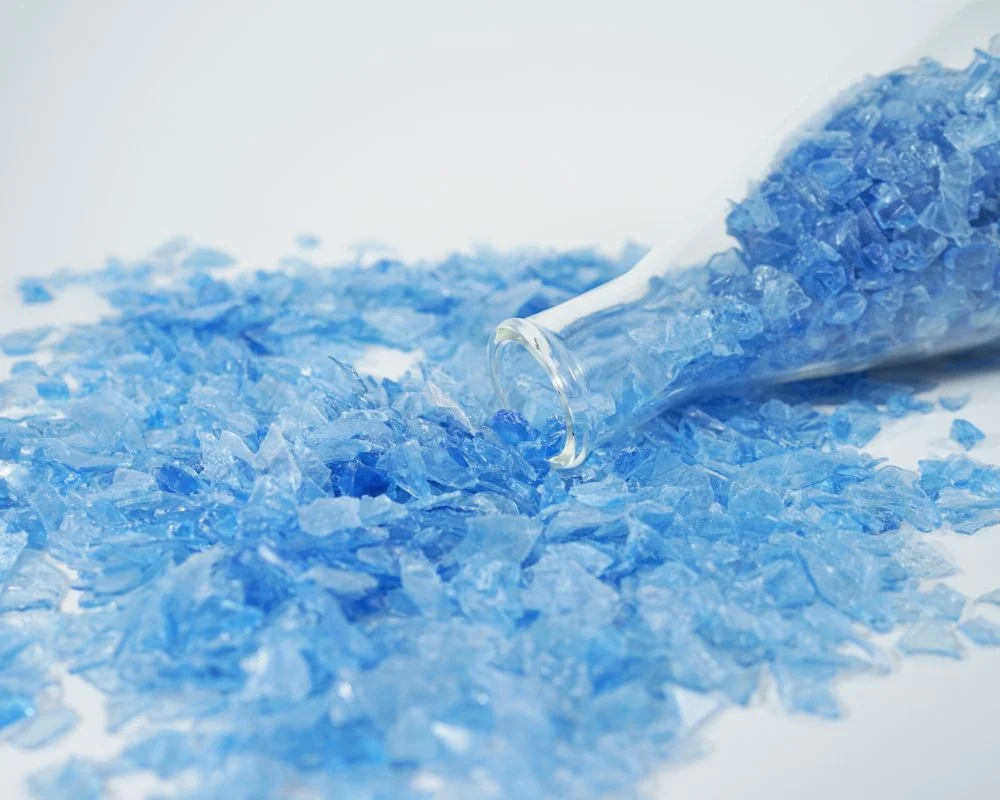
Colored PP copolymer granule is a polypropylene copolymer-based raw material that is processed into granules and supplied in specific colors. The granule form allows the material to be fed regularly into injection molding, extrusion and other plastic processing equipment. The desired color can be obtained through pigments, masterbatch systems or previously colored recyclable materials.
PP copolymer materials are produced by incorporating an additional monomer into the polypropylene chain. This structure is generally preferred when manufacturers need improved impact resistance, flexibility or low-temperature durability. Impact copolymer grades can offer a balanced combination of stiffness and toughness, making them suitable for demanding industrial applications.
Colored PP copolymer granule is a polypropylene copolymer-based raw material that is processed into granules and supplied in specific colors. The granule form allows the material to be fed regularly into injection molding, extrusion and other plastic processing equipment. Manufacturers can review the properties, production structure and application areas of colored PP copolymer to select a raw material that matches their processing and performance requirements.
Basic Structure of PP Copolymer
Polypropylene materials are generally divided into two main groups: homopolymer PP and copolymer PP. Homopolymer polypropylene is often preferred in applications requiring higher stiffness, chemical resistance and dimensional stability. Copolymer polypropylene, on the other hand, is commonly selected where impact resistance, toughness and improved low-temperature performance are required.
PP copolymers can also be classified as random copolymers and block or impact copolymers. Random copolymer grades generally provide better transparency, flexibility and surface appearance. Impact copolymer grades are designed to provide greater impact strength and mechanical durability.
The appropriate grade should not be selected only according to general polymer definitions. Technical data sheets, production requirements and sample trials should also be considered. Some PP copolymer grades are designed for high-flow applications and complex mold geometries, while others focus on impact resistance and structural performance.
The correct balance between flow, stiffness and toughness depends on the final product. A thin-walled packaging component and an industrial transport crate do not require the same technical properties. Therefore, the polymer structure must be matched with the intended application.
Advantages of Using Colored PP Copolymer Granules
Colored PP copolymer granule can improve production efficiency when the correct grade and processing conditions are selected. One of its most important advantages is that the raw material is already supplied close to the required final color. This can reduce the need for additional masterbatch or pigment dosing in every production batch.
The main advantages include:
- Supporting consistent color between production batches
- Reducing additional coloring operations
- Providing impact resistance and toughness
- Allowing regular feeding in injection molding equipment
- Offering compatibility with different product designs
- Supporting resource efficiency when PIR content is used
- Helping manufacturers balance cost and performance
- Reducing preparation time before production
- Supporting repeatable surface appearance
- Simplifying raw material planning
However, colored granules should not be selected only on the basis of appearance. Mechanical performance remains a priority, especially when the final product is exposed to impacts, loads, temperature changes, chemicals or outdoor conditions.
In recycled colored materials, batch consistency, contamination control and color tolerance become even more important. Manufacturers should establish clear acceptance criteria before starting large-scale production.
Technical Properties and Performance Criteria
Several technical parameters must be evaluated when purchasing or processing colored PP copolymer granule. One of the most important is the melt flow rate, commonly expressed as MFI or MFR. This value indicates how easily the molten polymer flows under specified temperature and load conditions.
Higher flow values may help fill thin-walled, large or complex molded parts. However, a very high melt flow rate may not provide the required mechanical strength in every application. Therefore, melt flow should always be assessed together with impact resistance and stiffness.
Impact resistance is particularly important in products such as crates, buckets, automotive components, housings and industrial containers. Stiffness helps the final part maintain its shape under load. Manufacturers must therefore choose a grade that provides the appropriate balance between toughness and rigidity.
Color performance should not be assessed only through visual inspection. Whenever possible, manufacturers should use a standard sample, defined color code or spectrophotometric measurement. Foreign polymers, metal particles, excessive moisture, dust and burned material residues can lead to surface defects or reduced mechanical performance.
The main criteria to evaluate include:
- Melt flow rate and processing compatibility
- Impact resistance and stiffness balance
- Color shade and batch consistency
- Moisture, odor and contamination level
- Granule size and feeding performance
- Legal and technical requirements of the final product
- Recycled content ratio, when relevant
- Surface appearance after sample production
- Mold filling performance
- Dimensional stability of the finished component
A complete material evaluation helps reduce production risks. It also makes it easier to identify potential problems before serial production begins.
Application Areas of Colored PP Copolymer Granule
Colored PP copolymer granule can be used in a wide range of products. However, each application may require a different technical grade. A thin-walled container, for example, requires different flow and impact characteristics than a heavy-duty industrial crate.
Automotive Components
PP copolymer materials can be used in interior trim parts, housings, covers and selected exterior automotive components. Impact resistance, dimensional stability, surface appearance and color consistency are important in this sector.
High-flow grades can support the molding of large or complex components. Low-temperature impact performance may also become critical depending on the operating conditions of the vehicle.
Manufacturers should also consider resistance to vibration, temperature changes and repeated use. Sample production and application-specific tests are recommended before large-scale use.
Household Products
Colored PP copolymer granule can be used in storage containers, buckets, organizers, kitchen accessories, cleaning products and various household items. In these products, color consistency, impact durability and production speed are often evaluated together.
The material can also be suitable for products requiring an attractive surface appearance. However, the final selection should take into account wall thickness, expected load and repeated-use conditions.
Packaging Products
Suitable PP copolymer grades can be used in rigid packaging, boxes, caps, containers and thin-walled products. High-flow materials can make it easier to fill complex or thin-walled molds.
In food, cosmetic or chemical packaging applications, technical performance alone is not sufficient. The material must also comply with the relevant contact and regulatory requirements.
Recycled polypropylene should not automatically be considered suitable for food contact simply because it belongs to the PP polymer family. Manufacturers must review declarations of compliance, migration tests and customer specifications.
Industrial Crates and Containers
Impact resistance is critical in transport crates, toolboxes, logistics containers and industrial storage products. These products may be exposed to repeated loads, drops and impacts during use.
For this reason, manufacturers should perform tests under conditions that are close to the actual operating environment. Wall thickness, rib design, mold structure and cooling conditions also influence the final performance.
Colored PP copolymer materials can offer a practical solution in applications where both mechanical durability and product identification by color are required.
Injection-Molded Technical Components
Machine housings, electrical appliance parts, toys and technical plastic components are also common application areas. The appropriate melt flow rate allows the material to fill molds with complex geometries.
Technical components may require additional properties such as dimensional stability, surface quality and resistance to repeated impacts. Therefore, the raw material should be tested together with the final mold and processing conditions.
Considerations in Injection Molding
Successful processing of colored PP copolymer granule depends on matching machine settings with the characteristics of the selected material. Even two materials from the same polymer family may behave differently because of melt flow, additives or recycled content.
The machine and feeding system should be cleaned before production begins. Granules remaining from the previous color can cause shade variations. Old material remaining in the screw, barrel, hopper or hot runner system may also create black spots, burn marks or inconsistent surface appearance.
Processing temperature, injection pressure, mold temperature, holding pressure and cooling time should be adjusted carefully. Excessive temperature may cause thermal degradation and color change. Low processing temperatures may lead to incomplete filling, weld lines or poor surface quality.
Manufacturers should record the processing parameters used for each successful production batch. These records make it easier to maintain consistency during future production.
When switching to a new raw material, a small trial batch should be produced first. The following properties should then be evaluated:
- Mold filling
- Surface appearance
- Color consistency
- Part dimensions
- Shrinkage behavior
- Impact performance
- Warpage
- Cycle time
This approach reduces the risk of high scrap rates during serial production.
How to Select the Right Colored PP Copolymer Granule
The selection process begins with a clear definition of the final product. Manufacturers should identify how much load the part will carry, the temperatures it will face, whether it will be used outdoors and which production method will be applied.
The required color standard should then be defined. General descriptions such as blue, gray or black may not be sufficient for serial production. A reference sample or recognized color code helps reduce differences between supplier and manufacturer expectations.
Small shade variations may occur in recycled colored materials. For this reason, acceptable color tolerances should be determined in advance.
A structured selection process can follow these steps:
- Define the final use conditions.
- Determine the required impact and stiffness levels.
- Select a melt flow range compatible with the mold.
- Establish the color reference and tolerance.
- Perform sample production.
- Complete mechanical and visual inspections.
- Prepare a batch control plan.
- Confirm storage and traceability procedures.
- Review customer specifications.
- Approve the material before serial production.
This approach prevents decisions based only on purchase price. A lower-cost material may increase total production expenses if it causes excessive scrap, color inconsistency, incomplete mold filling or customer complaints.
Importance of PIR-Based PP Copolymer Granule
PIR stands for post-industrial recycled material. It refers to plastic waste generated during manufacturing or industrial activities before the product reaches the consumer. Production scrap, defective parts, edge trims and excess process materials can be recovered and returned to the raw material cycle.
Sorting post-industrial waste according to polymer type and color helps improve the consistency of recovered raw materials. Burkasan processes plastic waste from different industries through specialized recycling lines. The materials are separated, prepared and subjected to quality control before being returned to production as secondary raw materials.
The use of PIR-based colored PP copolymer granule can help reduce demand for virgin raw materials. It can also contribute to the recovery of production waste and support more efficient use of industrial resources.
Nevertheless, recycled content cannot be used at the same level in every product. Suitability depends on technical requirements, customer specifications, testing results and applicable regulations.
For products requiring high mechanical performance, manufacturers may use recycled material in controlled ratios. The exact ratio should be determined through production trials and performance testing.
PIR materials may offer several advantages:
- Recovery of industrial production waste
- Reduced consumption of primary raw materials
- Lower dependence on virgin polymer
- Support for circular production models
- Improved resource efficiency
- Potential cost advantages
- Reduced volume of waste sent for disposal
These advantages become more meaningful when the material is properly separated, processed and quality-controlled.
The Ministry of Environment, Urbanization and Climate Change highlights the use of recycled materials in production as an important part of Türkiye’s transition to a circular economy.
Quality Control and Storage Conditions
The quality of colored PP copolymer granule should not be evaluated only during processing. Incoming quality control, batch tracking and proper storage are also important.
Granules should be stored in a clean, dry and closed environment. Different polymer types and colors must be separated to prevent contamination. Open bags should not be left exposed for long periods, as dust and foreign particles may enter the material.
Each batch should be checked for color, melt flow, density, moisture, contamination and visual cleanliness whenever possible. Critical applications may also require impact, tensile, flexural or dimensional testing.
Lot numbers should be recorded during production. This allows the manufacturer to trace the raw material used in the event of a quality problem.
Storage and handling recommendations include:
- Keep the material away from direct sunlight.
- Protect bags from moisture and contamination.
- Store different colors separately.
- Prevent mixing with other polymers.
- Clean transport and feeding equipment regularly.
- Use first-in, first-out inventory management.
- Keep batch labels visible and readable.
- Close partially used bags properly.
- Inspect silos and hoppers before use.
Light-colored production requires particular care because residues from previously processed dark materials may create visible defects.
Burkasan Colored PP Copolymer Solutions
Burkasan offers colored PP copolymer materials as part of its industrial plastic recovery activities. These materials can be evaluated in automotive parts, household products, packaging, injection-molded components, industrial crates and containers.
The most effective approach is to share the complete application requirements with Burkasan before material selection. Manufacturers should specify the processing method, desired color, mechanical expectations, annual consumption and quality standards.
This information helps identify a material that is suitable not only in terms of color but also in terms of processing and final product performance.
Burkasan’s post-industrial recycling approach supports the recovery of plastic materials according to their polymer and color categories. Instead of allowing production waste to lose its economic value, these materials can be processed and returned to industrial production.
Manufacturers seeking colored PP copolymer granule solutions can perform sample trials before serial production. This allows the raw material, machine settings and mold design to be evaluated together.
Frequently Asked Questions
What is colored PP copolymer granule?
Colored PP copolymer granule is a polypropylene copolymer-based raw material produced in granule form and supplied in a specific color. It can be used in injection molding, extrusion and other suitable plastic processing methods.
What is the difference between PP copolymer and PP homopolymer?
PP homopolymer generally provides greater stiffness, while PP copolymer can offer improved impact resistance, toughness and low-temperature performance. Exact properties depend on the selected grade and additive system.
Where is colored PP copolymer granule used?
It can be used in automotive parts, household products, packaging, transport crates, industrial containers, toys, electrical appliance components and injection-molded technical products.
Is colored PP copolymer suitable for injection molding?
Many PP copolymer grades are suitable for injection molding. However, compatibility depends on melt flow rate, mold geometry, wall thickness and required mechanical performance.
Why is the MFI value important?
MFI indicates how easily the molten polymer flows. Higher values may support the production of thin-walled and complex parts. However, material selection should not be based on MFI alone. Impact resistance and stiffness should also be evaluated.
Can recycled PP copolymer granule be used?
Recycled PP copolymer granule can be used in many applications when technical requirements are met. Material purity, color consistency, melt flow, mechanical performance and customer specifications should be checked before use.
Why do shade differences occur in colored granules?
Raw material source, pigment ratio, recycled content, processing temperature, contamination and batch variation can all cause shade differences. Using a reference sample and maintaining machine cleanliness can reduce this risk.
Can PP copolymer be used in food packaging?
Some PP copolymer grades may be suitable for food packaging. However, not every virgin or recycled PP material automatically complies with food-contact regulations. Required declarations and test reports must be reviewed.
Is sample production necessary before purchasing granules?
Sample production is strongly recommended when color, surface quality and mechanical performance are critical. A trial helps evaluate mold filling, shrinkage, shade, appearance and part durability.
How should colored PP copolymer granules be stored?
Granules should be stored in a dry, clean and closed environment. They should be protected from moisture, direct sunlight and foreign materials. Different polymers and colors must be stored separately.
Can colored PP copolymer granule be mixed with virgin PP?
It may be possible to mix recycled colored PP copolymer with virgin PP in controlled ratios. However, compatibility and performance must be confirmed through production trials and testing.
How is color consistency controlled?
Color consistency can be controlled through approved reference samples, color codes, spectrophotometric measurements and batch inspections. Processing temperatures and machine cleanliness should also remain stable.
Conclusion
Colored PP copolymer granule is an important raw material alternative for plastic production because of its impact resistance, processability, color consistency and broad application range. However, selecting the right product requires more than comparing color or price.
Melt flow rate, stiffness, impact strength, material purity, batch consistency and final product requirements must be evaluated together. Sample production should be completed before serial use, particularly in applications where appearance and mechanical performance are critical.
PIR-based PP copolymer options can support the recovery of industrial production waste and reduce the demand for virgin raw materials when used under controlled conditions. Burkasan contributes to this process by recovering post-industrial plastic materials and returning them to production as usable raw material solutions.
By sharing processing conditions, color expectations and technical requirements with Burkasan, manufacturers can identify a more suitable colored PP copolymer granule for their production processes. This approach supports consistent quality, controlled production and more efficient use of plastic resources.